Agility and Speed Drills to Elevate Your Game
Boost footwork, acceleration, and reaction time with proven agility ladders, cone drills, sprint intervals, and plyometrics to sharpen performance fast.
Foundations of Quickness
Agility is the ability to accelerate, decelerate, and redirect with control, and it starts with strong movement fundamentals. Begin every session with dynamic mobility for ankles, hips, and thoracic spine, followed by light activation such as mini-band walks and skips to prime neuromuscular readiness. Emphasize posture: tall spine, relaxed shoulders, eyes forward, and a braced core that keeps the pelvis stable. Use simple ladder marches and gentle hops to learn rhythm, foot placement under the hips, and quiet contacts. Coach arms like pistons to synchronize upper and lower body, and keep a slight forward lean to prepare for efficient acceleration mechanics. Think ABCs: alignment, balance, control. Breathe with intent, using full exhales to establish intra-abdominal pressure before faster efforts. Choose a grippy surface and supportive footwear to reduce slipping and protect joints. These foundations sharpen body awareness, minimize wasted motion, and create the reliable platform needed for higher-speed, higher-chaos drills that truly elevate performance.
Precision Footwork and Ladder Patterns
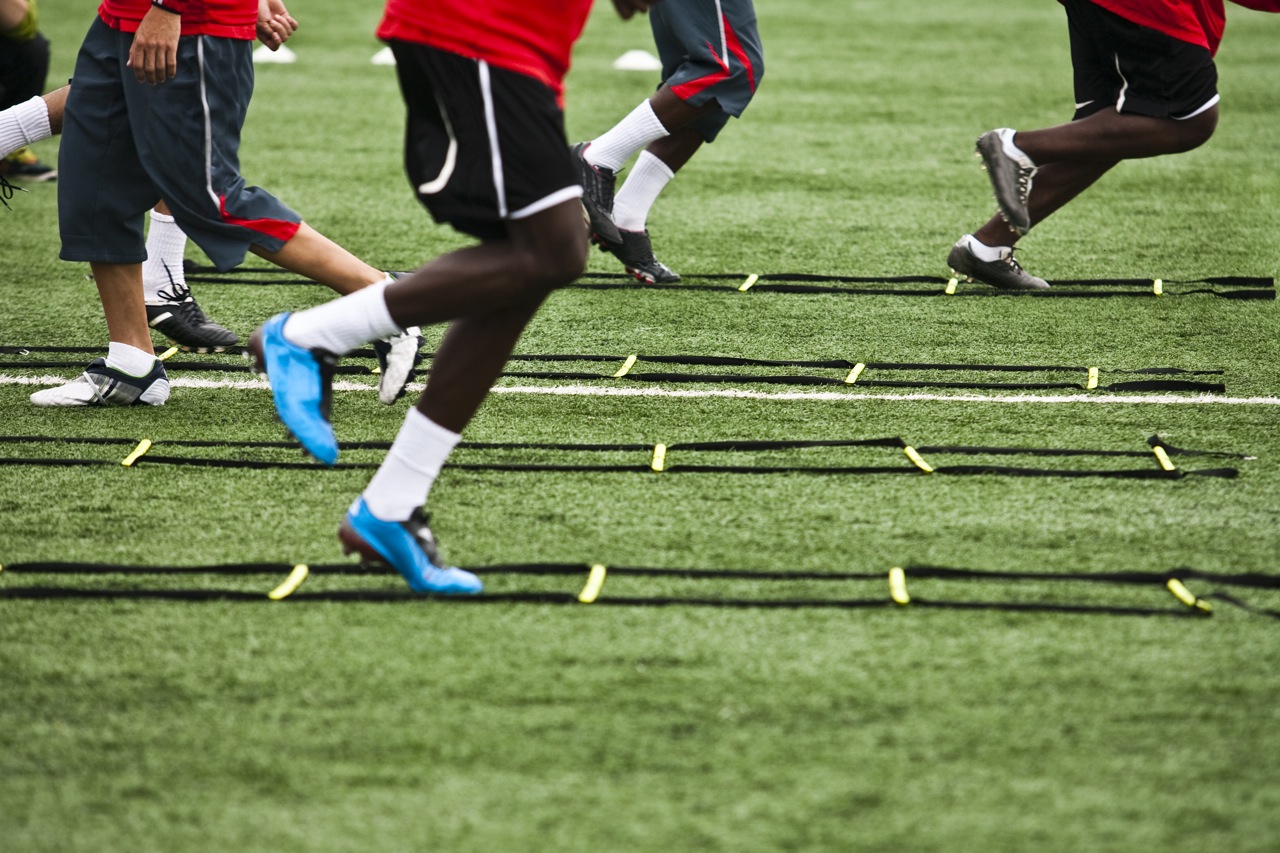
Footwork drills refine timing, coordination, and ground contact quality, transforming messy steps into decisive actions. Start with ladder patterns like in-in-out-out, lateral two-in one-out, and the classic crossover shuffle, focusing on midfoot strikes, hips level, and consistent arm rhythm. Progress from slow, technique-first reps to crisp, fast sets that still look smooth. Pair ladders with cone sequences such as zigzags, slaloms, and figure-eights to challenge multi-planar movement and body control. Keep steps short and snappy, landing under the center of mass rather than reaching. Common fixes: drive the knee forward instead of pawing the ground, maintain knee alignment over the toes, and avoid twisting the torso on lateral moves. Sprinkle in single-leg entries to build stability and proprioception, and vary tempo by mixing steady rhythms with surprise speed bursts. Prioritize quality over quantity, resting long enough to keep patterns precise, so every rep engrains efficient, repeatable footwork.
Explosive Starts and Sharp Direction Changes
Game-changing speed relies on acceleration mechanics and effective deceleration so you can attack space and shut it down instantly. Use falling starts, split-stance starts, and push-up starts to practice powerful first steps with a positive shin angle, low heel recovery, and arms driving back to front. Keep the foot under the hips to channel force forward rather than bouncing vertically. Train braking strength with short approach runs into stick positions: sink the hips, keep the chest tall, and let the knees track over toes while staying balanced. Layer in change-of-direction drills such as T-patterns, short shuttles, and angled cone cuts to rehearse re-acceleration out of turns. Cue nose over toes during decel, then punch the ground and project out with a strong torso line. Choose safe turning radii, control entry speed early, and progress toward sharper, faster redirections. Mastering the start, the stop, and the launch builds reliable game-speed movement.
Plyometrics and Reactive Speed
Plyometrics turn strength into elastic power, teaching the body to store and release energy quickly. Begin with pogo hops, lateral skaters, and low-amplitude bounds, emphasizing short ground contact, stacked joints, and soft yet springy landings. Use arm swing to amplify projection while keeping the trunk stable. Add vertical and lateral jumps, split-squat jumps, and controlled drop landings to reinforce stiffness and safe deceleration. Then introduce reactive agility: partner calls, random cone flashes, ball drops to chase, and mirror drills that demand instant decisions. Rotate visual, auditory, and tactile cues so reactions become automatic under different types of pressure. Keep volumes manageable and prioritize elegance over exhaustion; a few crisp sets beat sloppy marathons. Pair a brief explosive drill with a quick sprint for contrast training, building transfer to real speed. Monitor landing quality and symmetry, and progress from bilateral to single-leg efforts only when movement stays sharp and confident.
Programming, Recovery, and Consistency
Sustained progress comes from intelligent program design, measured tracking, and disciplined recovery. Organize two or three focused agility sessions per week, each starting with a thorough warm-up, followed by 20 to 30 minutes of high-quality speed work, and a brief cool-down of mobility and breathing. Micro-dose footwork on off days with short ladder or cone bursts to maintain neuromuscular sharpness without fatigue. Pair agility with strength patterns that support speed: hinge, squat, lunge, push, pull, and anti-rotation core work to reinforce force production and transfer. Track simple metrics such as shuttle times, split accelerations, and number of precise contacts, and note how performance changes with rest. Use progressive overload by tightening times, sharpening angles, or increasing complexity rather than simply adding volume. Protect gains with sleep, hydration, and protein-rich nutrition, and treat recovery as training. Consistency plus smart adjustments will convert drills into durable, game-ready speed.