Brushed vs Brushless Motors: Pros, Cons, and Best Uses
Compare brushed and brushless DC motors: how they work, pros and cons, costs, and the best applications so you can choose the right drive.
Core Differences at a Glance
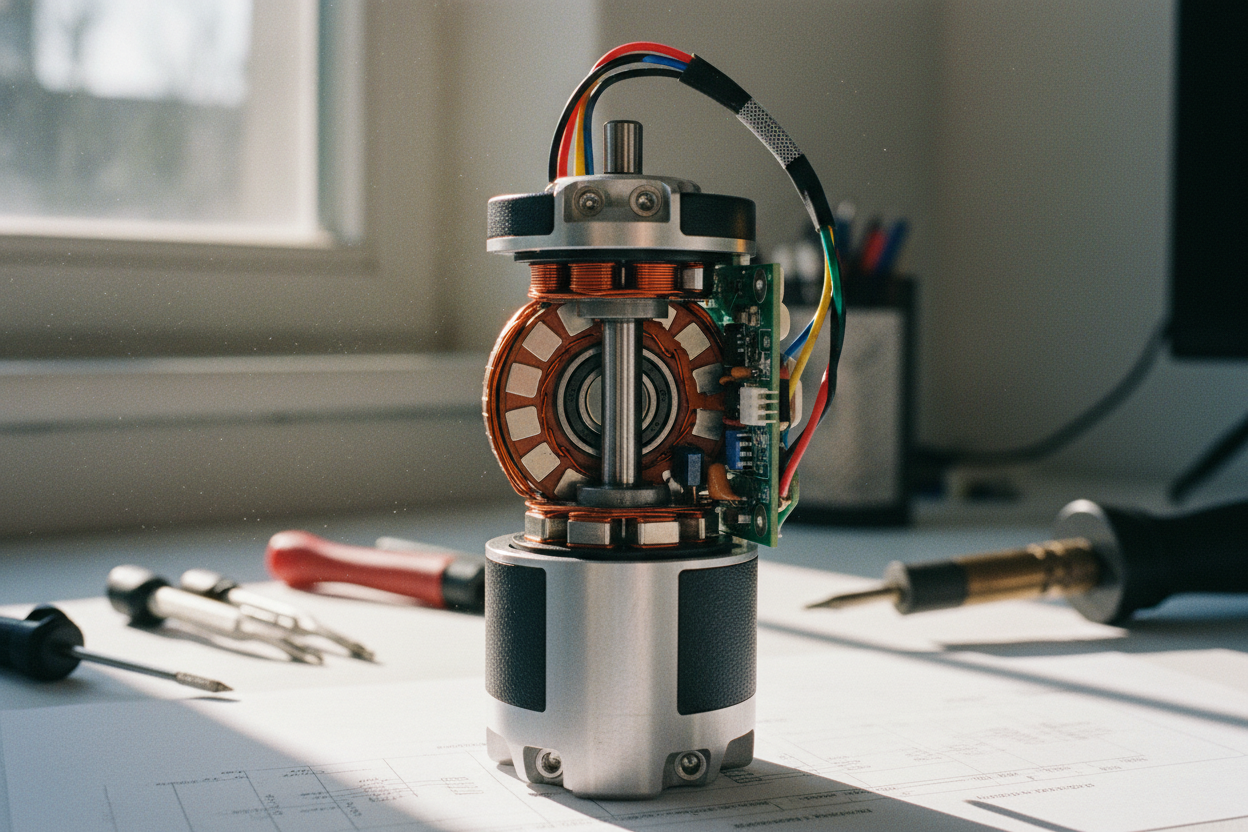
At the heart of the debate between brushed motors and brushless motors is how each handles commutation, the switching of current that keeps the rotor turning. Brushed designs place windings on the rotor and use a mechanical commutator with carbon brushes to reverse current as the shaft spins. That simplicity makes them easy to power directly from DC, with instant response and minimal electronics. Brushless designs flip the layout: permanent magnets ride on the rotor, windings sit on the stator, and an electronic controller performs the switching using sensors or back‑EMF detection. Relocating windings to the stator improves cooling and reduces moving mass, enabling higher speeds and better efficiency. Without brushes, there is less friction, less electrical noise, and far fewer wear parts. The tradeoff is that brushless systems demand compatible electronics, wiring, and tuning to unlock their benefits. In short, brushed favors simplicity and low cost; brushless favors performance, longevity, and precise control that can be tailored to your application's needs.
Brushed Motors: Strengths and Tradeoffs
Brushed motors are beloved for simplicity, affordability, and plug‑and‑play operation. Apply voltage and they spin; reverse polarity and they change direction. They deliver strong starting torque, shrug off momentary overloads, and can be controlled with basic switches or linear regulators. This makes them attractive for cost‑sensitive products, rugged tools, small pumps, door actuators, and mechanisms that run in short duty cycles. They are also serviceable: worn brushes and commutators can often be replaced or resurfaced, extending life on a budget. The compromises are well known. Brushes introduce friction, sparking, and wear, leading to scheduled maintenance and potential carbon dust. Heat builds in the rotor windings, limiting continuous power density and top speed. Efficiency typically lags behind brushless counterparts, so batteries drain faster and enclosures get warmer under load. Electrical EMI from brush arcing can bother sensitive electronics, and mechanical noise may be noticeable in quiet environments. If your priority is initial cost and basic functionality, brushed remains a strong and reliable choice.
Brushless Motors: Advantages and Considerations
Brushless motors (BLDC or PMSM) shine where efficiency, precision, and longevity matter. With no brushes, they minimize friction and eliminate commutator wear, enabling quiet operation, high speed, and a long service life. Windings on the stator shed heat efficiently, boosting continuous torque density and improving reliability in demanding duty cycles. Paired with a capable controller, they offer refined speed control, smooth acceleration, and advanced features like field‑oriented control, regenerative braking, and smart fault protection. They also reduce arcing‑related EMI, a plus near sensors and radios. The flip side is complexity and upfront cost. You must select or program a suitable drive, manage sensorless startup or hall sensors, and ensure proper wiring, shielding, and thermal design. Controllers introduce their own high‑frequency switching noise that may require filtering. Integration takes more engineering, but the payoff is lower energy consumption, tighter positioning, and consistent performance over long runtimes. For systems seeking high uptime, battery life, and refined behavior, brushless is often the optimal path.
Choosing the Right Motor for Your Project
Start with your duty cycle and torque‑speed needs. If the load demands frequent starts, short bursts, or infrequent use with limited budget, brushed can meet requirements with minimal complexity. For continuous operation, thermal headroom, and energy savings, brushless tends to win. Consider control precision: basic on‑off or coarse speed can favor brushed; tightly regulated speed, positioning, or dynamic braking favor brushless. Evaluate your power source: when every watt matters, higher efficiency from brushless preserves batteries and reduces heat. Assess the environment: dust and vibration challenge both types, but brushless avoids brush debris and commutator wear; sealing, lubrication, and cooling strategies still matter. Think about maintenance access and total cost of ownership. Low purchase price can be outweighed by brush replacement, downtime, and wasted energy. Space and weight constraints may tilt toward brushless for superior power density. Finally, review EMI tolerance and nearby electronics, required noise levels, and safety expectations to ensure a motor and controller pairing that behaves predictably.
Best Uses and Practical Examples
Choose brushed motors for budget‑friendly, robust tasks: compact winches, intermittent‑duty actuators, simple pumps, latches, small conveyors, and mechanisms where an operator can accept periodic maintenance. They excel in straightforward reversing, crude speed control, and scenarios where a simple switch or relay is ideal. Opt for brushless motors when operation is continuous, silence is valued, and precise control improves outcomes. Think drones, gimbals, e‑mobility drives, HVAC and server fans, precision pumps, CNC spindles, robotic joints, and high‑efficiency appliances. In mixed systems, a practical approach is to assign intermittent, high‑shock tasks to brushed units while reserving brushless for always‑on motion or where battery life and thermal limits are tight. When scaling production, factor in energy savings, longer service intervals, and reduced downtime from brushless technology. By aligning motor type with workload, environment, and control goals, you gain reliable torque, predictable lifespan, and a balanced cost profile that supports both performance and practicality.